All Categories
Featured
Table of Contents
With globalization in retreat, local blocks and brand-new guidelines in trade, security and currencies emerge, making it key to invest with resilience and geographical/strategic diversity. We enter a more persistent inflationary regime due to structural factors and public deficit, so inflation becomes a central axis to protect long-term genuine returns.
2026 demands. With shorter maturities, ought to use attractive returns with manageable risk. Neutral on sovereign debt from emerging markets and.: AI continues to be an essential driver (higher diversification recommended). We continue to prefer Asia, with among our primary convictions.: pressure persists on oil and gas rates, benefiting Europe.
European currencies might extend their gains, with the remaining as a. The reasonably as the results of President Trump's trade agenda dissipate and the boom that suggests investment in AI.: Japan combines exit from deflation with reforms and more nominal development; China continues to be weighed down by real estate/consumption in the brief term, however with a structural engine in AI and technology.: neutral position in developed stock due to stabilize between AI advantages and valuations/tariffs.
Why Foreign Investment Inflows Change in 2026?Key Financial Trends Across the Middle East
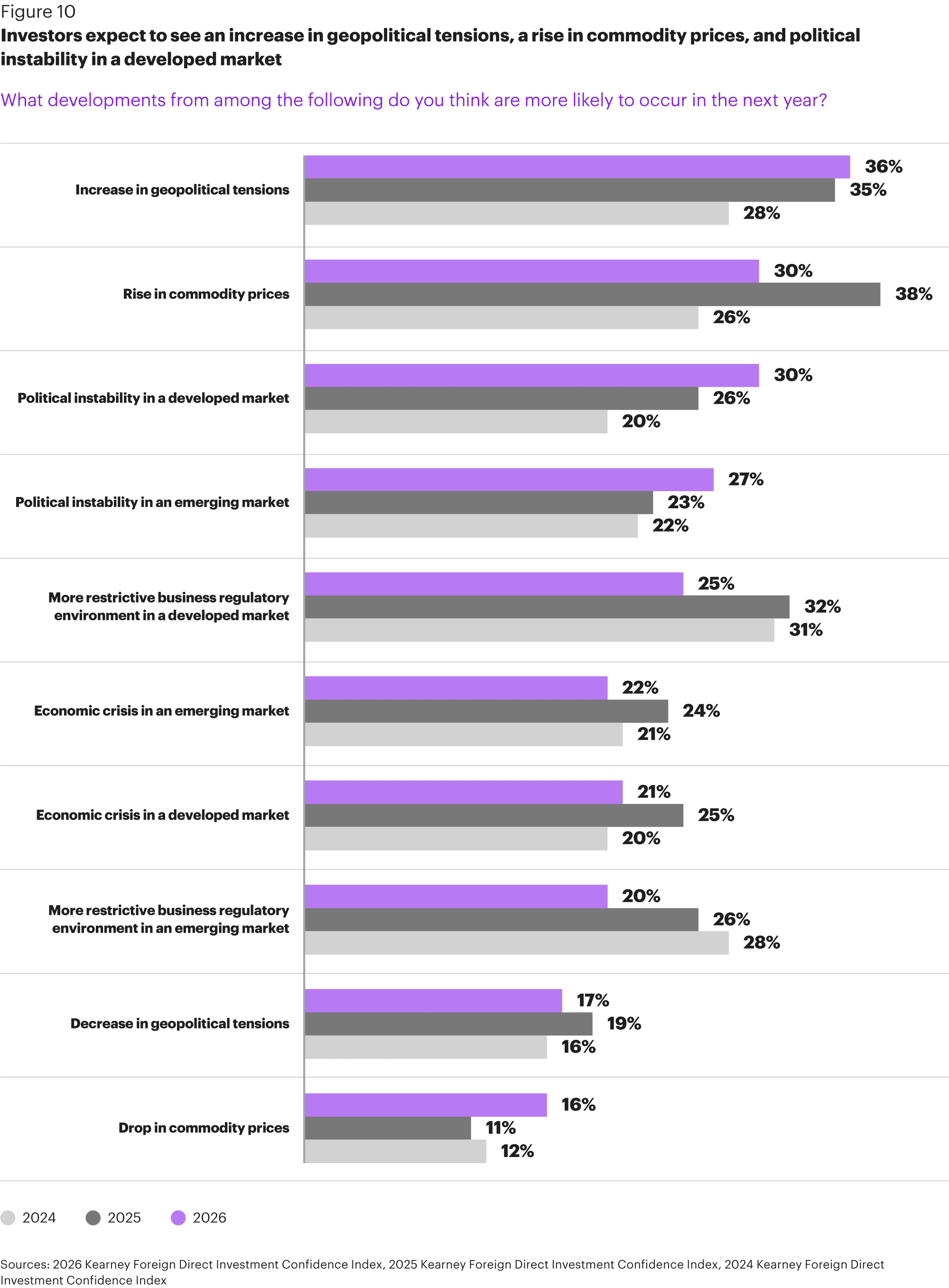
The primary dangers are a possible bubble/disappointment in AI returns, political noise in the US and geopolitical hotspots (Russia-Ukraine and others).: retail entry continues in private and AI continues to permeate portfolios. Rotation and IPOs improve but keep an eye out for stress in venture capital/direct financing, while hedge funds can capture alpha in volatility.
Why Foreign Investment Inflows Change in 2026?The ECB would embrace a more cautious position, stabilizing German fiscal stimulus and dangers on employment and usage. The: spreads stay really tight, but backed by high corporate profits, high margins and low default rates. The environment favors: returns are anticipated to be lined up with present yield levels, mainly supported by the bring.
In the United States, a is preferred, combining brief period with direct exposure in the 710 year range. In investment grade, risk premium compression favors a rotation from subordinated to senior debt. If there is a bubble, it is not in the innovation itself, however in the evaluations of a specific group of business.

Emerging market financial obligation, backed by lower debt levels, solid principles and less dollar dependence, provides attractive options to industrialized market assets.: they are not a passing fad. Their development is driven by enduring structural factors. The recovery is underway and innovation will accelerate accessibility.: sticks out for much better risk-adjusted performance and much better credit quality compared to the US.
Nevertheless, after the last Fed rate cut, it is a secret to know the level to which rates will drop in 2026.2026 will be favorable for equities, and in fixed earnings it will be required to diversify and be selective., due to stimuli and accommodative financial policy. Amongst them, he sees more prospective in Japan and emerging markets due to evaluations.
Vital Tips for Entering 2026 Foreign Investment Opportunities
The of the year that will have the most affect on the markets will be Donald Trump, tariffs, central banks, AI, and geopolitics.: in the US, two-speed development is anticipated to continue in 2026, staying listed below its 2% potential. In the Eurozone, the economic recovery is getting momentum, driven in particular by financial investment strategies in Germany.
In the United States, the potential customers for long-term interest rates remain more uncertain. Present basics support credit, which will be a preferred bond possession for the next year.
There is a danger of a drop for the.: sustainability styles evolve and concentrate on adjusting to. In the medium term, there is issue about the boost in public debt levels and the possibility of speeding up inflation. There is a perceived.There is potential in the and good prospects for.: offers better dynamics and higher real returns than the financial obligation of developed markets.: can be considered a crucial location where cyclical and structural forces line up to create opportunities.
Capital Diversification Frameworks for a 2026 Economy
stays a necessary property in any allowance due to its ability to create return, bring and capitalization. Particularly, in the field, our company believe that the principles of providers remain solid. We continue to bank on constructing portfolios around high yield providers with reasonable debt levels and returns.Selection of instruments with lower scores, particularly CCC.: the fundamentals of the European banking sector remain strong.
Within the banking sector, it primarily focuses on.Very mindful to the possible contagion of to fixed income markets.: opportunities particularly in, sectors that present appealing appraisals and will benefit as quickly as the existing market distortions stabilize; as well as in. continues to be another appealing financial investment theme.

Latest Posts
Accelerating Industrial Growth through Global Diversification
Securing GCC Portfolios against 2026 Shifts
Accelerating Middle East Sectoral Diversification for Growth